

Patios are unforgiving places for plants. Paving soaks up heat during the day and radiates it back at night, wind funnels between walls, and rain often runs straight off the surface rather than soaking in. Containers let you sidestep all of that. You control the compost, the drainage and the position, which means you can grow plants that would sulk in an open border — and move them when the weather turns.
The trick to a low-maintenance display is not finding magic plants. It is setting the pots up properly in the first place, then choosing things that tolerate a missed watering or two. Get those two things right and a patio garden takes minutes a week rather than an hour a day.
Start with bigger pots than feels sensible
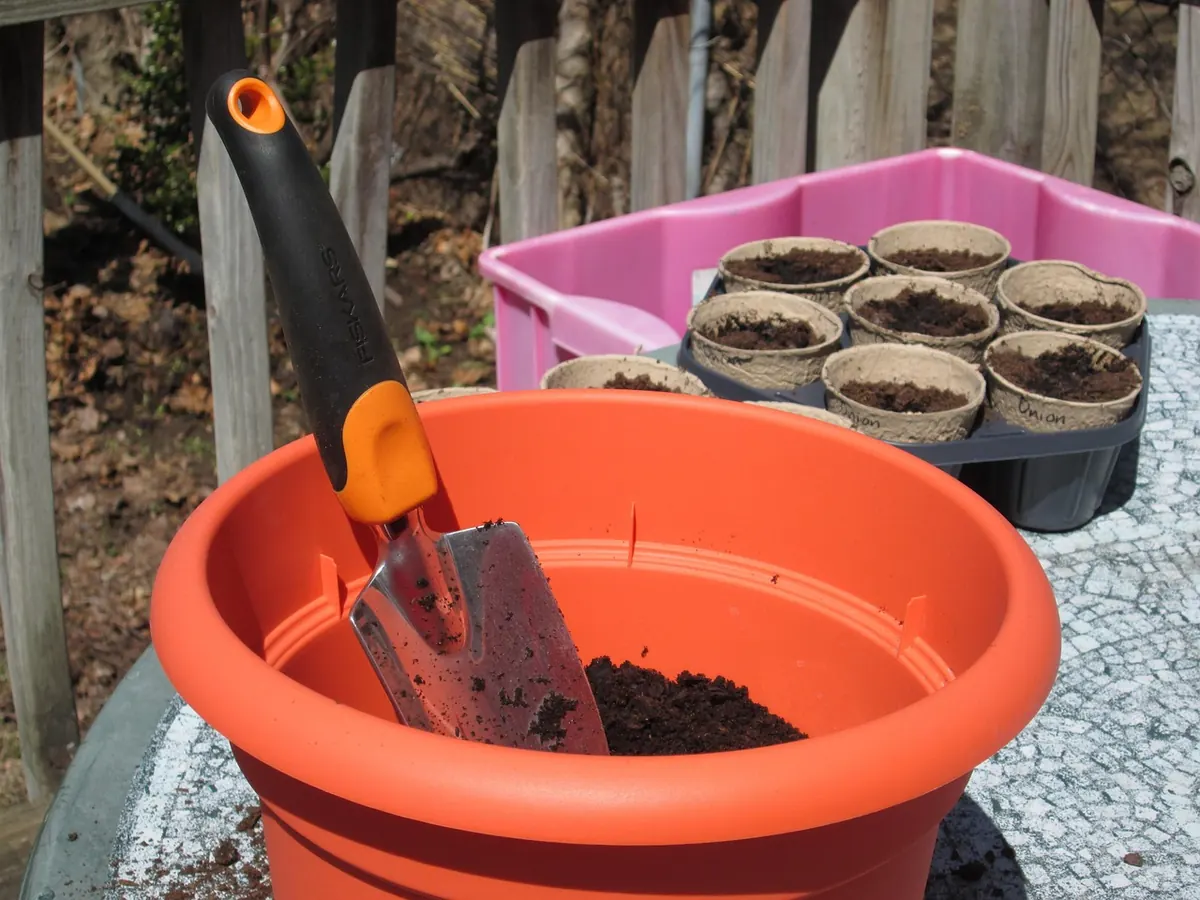
Small pots are the biggest single reason patio gardening turns into a chore. A 20cm pot can dry out in a day in July; a 40cm pot of the same compost might hold enough moisture for three or four. Fewer, larger containers look better, too, and they do not blow over.
As a rough guide, 35–45cm across is the sensible minimum for a shrub or a mixed summer display, and 50cm or more for anything you plan to keep for years. One large pot planted well will always beat five small ones crammed with bedding.
Whatever you buy, check for drainage holes. If the base sits flat on the paving, raise the pot on feet so water can escape and air can move underneath. Saucers catch a useful reservoir in summer, but empty them in winter — soggy roots in cold compost are how plants die over the colder months.
Material matters more than most people expect. Unglazed terracotta dries out fastest and can crack in a hard frost. Glazed pots and good-quality plastic hold moisture longer, and pale colours keep roots cooler in full sun. Compost is heavy when wet, so if you garden on a balcony, check what the structure can safely take before you commit to a row of large pots.
Get the compost right
For most summer displays, a peat-free multipurpose compost is fine. For shrubs and anything you plan to keep for years, a loam-based compost such as John Innes No 2 or No 3 holds water and nutrients better, and its weight helps keep tall plants upright in wind.
Mix slow-release fertiliser granules through the compost as you plant. Peat-free blends can be hungry for nitrogen as they break down, so a slightly generous handful does no harm. If the surface dries quickly while the compost below is still damp, that is normal — check about 3cm down with your finger before watering.
A layer of gravel or bark on top slows evaporation and stops rain splashing soil onto leaves. Crocks in the bottom are not needed for drainage, though one broken piece over the hole will stop compost washing out.
Choose plants that forgive you
Look for tough or silver foliage and plants from Mediterranean climates, which cope with sun, wind and the odd missed watering far better than soft bedding. Reliable choices include:
- Sun and heat: lavender, rosemary, thyme, oregano, salvia, pelargoniums, trailing verbena, agapanthus and sedum.
- Shade: hardy cranesbill geraniums, heuchera, ferns, Japanese anemone and ivy.
- Windy or exposed sites: hebe, euonymus, sedges such as carex, and low-growing sedums.
- Winter structure: skimmia, choisya, photinia and bay, all of which hold their shape year-round.
- Quick colour: cosmos, nicotiana and bidens, which fill gaps while slower plants establish.
A simple rule: pick two or three plants you like and repeat them across several pots. Repetition looks deliberate and is much easier to care for than a dozen different things.
Make watering less of a job
Water thoroughly rather than little and often. A proper soak sends roots deeper, where compost stays damp for longer. Through a normal British summer most containers need a soak once or twice a week; during a heatwave that becomes daily, and small pots may need it twice.
These habits cut the work significantly:
- Water in the morning, so less is lost to evaporation.
- Mulch the surface with gravel or bark.
- Group pots together so they shade one another.
- Use self-watering containers or a drip kit on a timer for pots that are awkward to reach.
- Fit a water butt if you can — rainwater is free and kinder to plants than tap water in hard-water areas.
If you are away often
Self-watering pots are worth the extra cost: they store water in a reservoir at the base and the plant draws it up as it needs it, which can stretch a week away into two. For everything else, group the pots in a shaded corner, move them out of the fiercest sun and give them a thorough soak the night before you leave. A neighbour with a key and a hose is still the simplest answer for a fortnight's holiday.
If you travel regularly, plan the display around it. Lavender, rosemary, sedum and agapanthus will shrug off ten days without water; nicotiana and trailing verbena may not recover at all.
Feeding and deadheading: the jobs that pay for themselves
Slow-release granules carry most containers through to midsummer, but plants in a small volume of compost run out of nutrients sooner than you expect — every watering washes a little more food out of the bottom of the pot. From July onwards, a liquid feed once a fortnight keeps flowers coming and foliage looking healthy. A standard tomato feed is as good as anything for flowering plants, and it takes two minutes with a watering can.
Deadheading is the other small job with a big return. Picking off spent blooms on pelargoniums, cosmos, verbena and salvias stops the plant putting energy into seed and pushes it into making more flowers. On a mature patio that is five minutes a week.
If a plant is struggling, resist the urge to feed it. More often than not the problem is water, light or a pot that has quietly become too small — none of which a feed will fix.
Preparing pots for winter
Winter is when a low-maintenance patio is won or lost. In most of the UK the killer is not cold but wet: compost that stays saturated for weeks rots roots that would otherwise have survived the frost.
- Stop feeding from early autumn and cut watering right back — for evergreens, once every two to three weeks is usually plenty.
- Empty saucers and keep pots raised on feet so surplus water drains away freely.
- Move tender or borderline-hardy pots against a house wall for shelter, and wrap terracotta or glazed pots in bubble wrap or hessian in a hard frost.
- Leave faded stems and seedheads on perennials: they shelter wildlife and protect the crown of the plant.
Come spring, top-dress permanent pots by scraping off the top 5cm of compost and replacing it with fresh, plus a handful of slow-release granules. That one job renews a pot for another year without repotting.
A beginner's planting plan you can copy
If you would rather not plan from scratch, this scheme works on a sunny patio and asks very little of you:
- One large pot as a centrepiece, planted with a compact rosemary or a bay standard for year-round structure.
- Two medium pots either side, each with lavender and a trailing verbena for scent and summer colour.
- One pot in shade, planted with heuchera and a hardy cranesbill geranium for a north-facing corner.
- A couple of small pots of sedum or thyme to fill gaps while everything else establishes.
Repeat the same plant in more than one pot and the arrangement looks intentional, even if it took an afternoon to put together.
None of this is complicated, and that is the point. Set the pots up properly once, plant them with things that suit the spot, and a British patio will give you months of colour for a few minutes' attention a week — even in a wet summer, and even when you forget to water.
Photo: intherightmeasure / Pixabay